A Practical Guide to Reading Regional Bus Timetables in the Visegrád Countries
How to decode departure columns, symbols, and school-day notes so a rural day trip goes as planned, with fewer surprises at the stop.
This guide is for travelers who want to take a rural bus in Czechia, Hungary, Poland or Slovakia and would rather not guess what the timetable means. https://bookofragra.pl/ We walk through how these sheets are usually laid out, what the small symbols and footnotes ask you to check, and how school-day notes can change whether a bus runs at all. You will be able to read a stop's departure column, spot the difference between weekday and holiday service, and build a simple day plan that leaves room for the return trip. We have stood at enough village stops to know which details matter, and which ones our editing process taught us to double-check before publishing.
What you need before you start
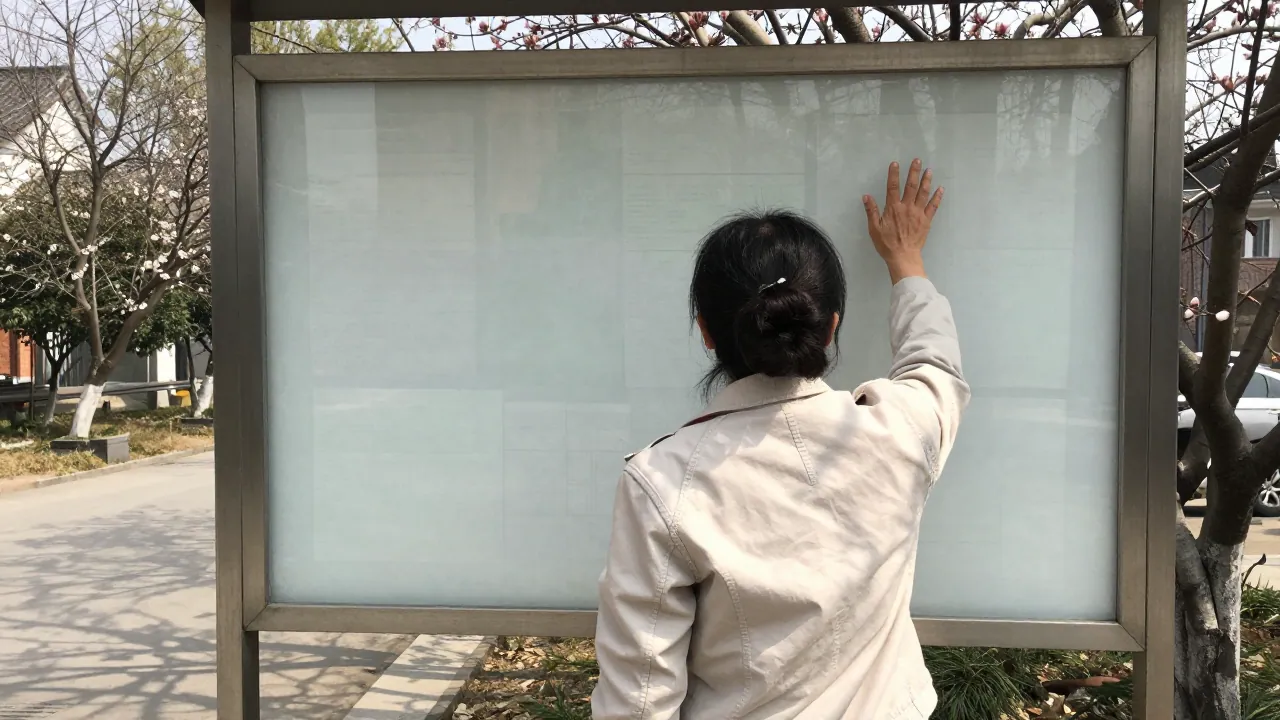
A rural bus stop in the Visegrád countries rarely looks like an airport departure board. You will find a printed panel, sometimes behind glass, sometimes faded, with several routes sharing one frame. Before you try to read it, gather a few things.
- The name of your starting stop, written exactly as it appears on the panel (village names can have two forms, as we explain in why so many towns have two names).
- The name of your destination stop, not just the town.
- The date you plan to travel, because school terms and public holidays change service.
- A phone with a photo camera, so you can photograph the panel and read it later without rushing.
If the panel is hard to read, the driver can usually confirm the departure time when the bus arrives. We treat the printed panel as the starting point and the driver as the final check.
Step by step: reading the panel
- Find the route number or route name at the top of the column group. Many panels list several routes side by side.
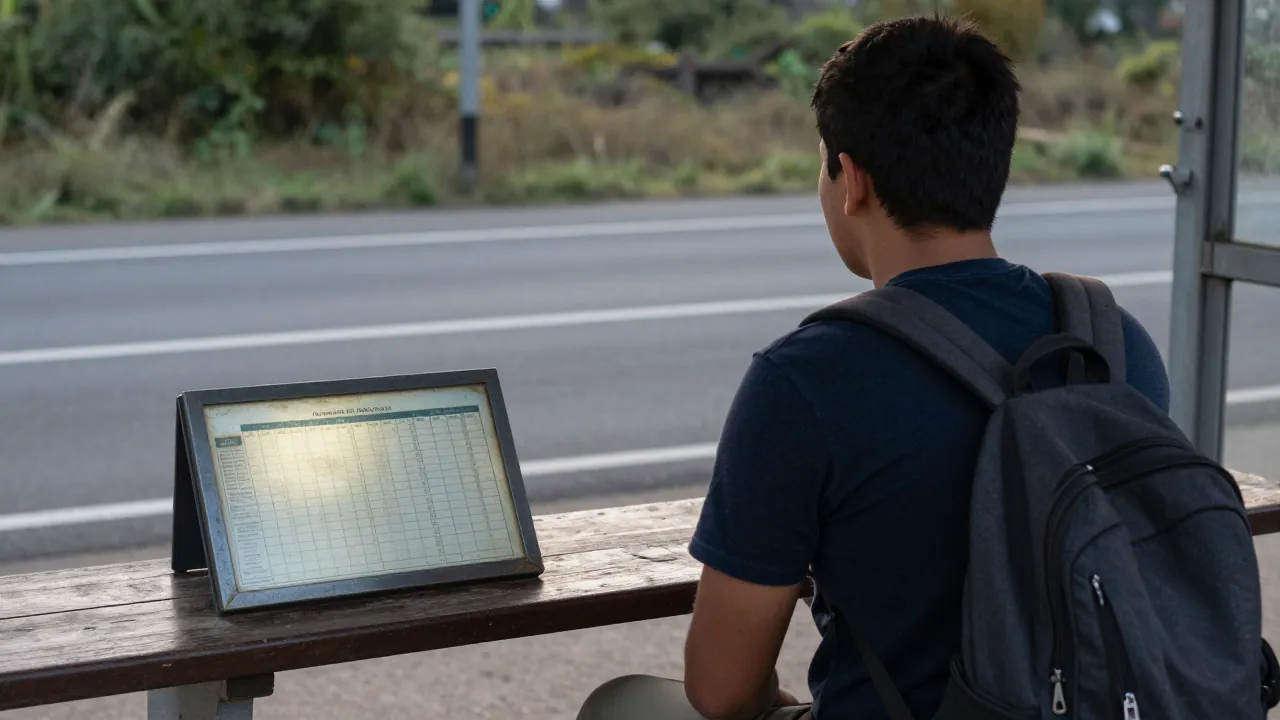
- Locate your stop in the left-hand list of stops. The times to the right belong to that stop, not to the start of the line.
- Identify the day columns. A typical panel has separate columns for workdays, Saturdays, Sundays and holidays, and sometimes a separate column for school days.
- Read down the column for your day and find the time closest after your arrival at the stop.
- Check the symbols next to the time. A small letter or asterisk usually points to a footnote at the bottom of the panel.
- Read the footnotes. This is where you learn whether the bus runs only on school days, stops on request, or takes a detour.
- Do the same for the return direction, using the panel at your destination or the reverse side of the sheet.
One habit saves trouble: read the footnotes before you plan the day, not at the stop. A single note can turn a convenient afternoon bus into one that does not exist on a Saturday. For a broader collection of timetable examples, including route patterns from different operators, the https://bookofragra.pl/ offers a useful reference set we sometimes consult. Keep it as a backup, not a replacement for the panel at your stop.
Symbols and school-day notes
The symbols vary by country and even by operator, so treat the footnote as the authority. Still, some patterns repeat. A symbol resembling a small circle or a letter often marks a bus that runs only when school is open. Another common note means the bus stops only if someone is waiting or has asked the driver to stop. A third note may say the bus does not run on public holidays.
| What you see | What it often means | What to do |
|---|---|---|
| A letter or symbol next to the time | A condition explained in the footnote | Read the footnote before planning |
| A separate school-day column | Service only when classes are in session | Confirm the school calendar or ask locally |
| A note about stopping on request | The bus may not stop unless signaled | Wait where the driver can see you |
| No column for Sunday or holiday | No service on that day | Plan around a different day or route |
School-day notes deserve special care because they follow a calendar that visitors do not carry in their heads. Term dates differ across the four countries, and a bus that runs in late June may not run in early July. When we mapped seasonal routes for our work on seasonal food markets, we learned to ask two questions: is school in session, and is the day a public holiday? The answers changed the plan more than once.
Common mistakes and how to avoid them
Most confusion comes from reading the panel the way we read a train timetable. These are the errors we see most often, and the small corrections that fix them.
- Reading across the row instead of down the column. The time belongs to the stop on the left, so read down.
- Assuming the first time is the departure from the start of the line. It is the time at your stop.
- Ignoring the footnote because the symbol is small. Photograph the panel and enlarge it.
- Assuming weekday service runs on a public holiday. Check the holiday column or ask.
- Planning only the outward trip. The return bus is the one that decides your day.
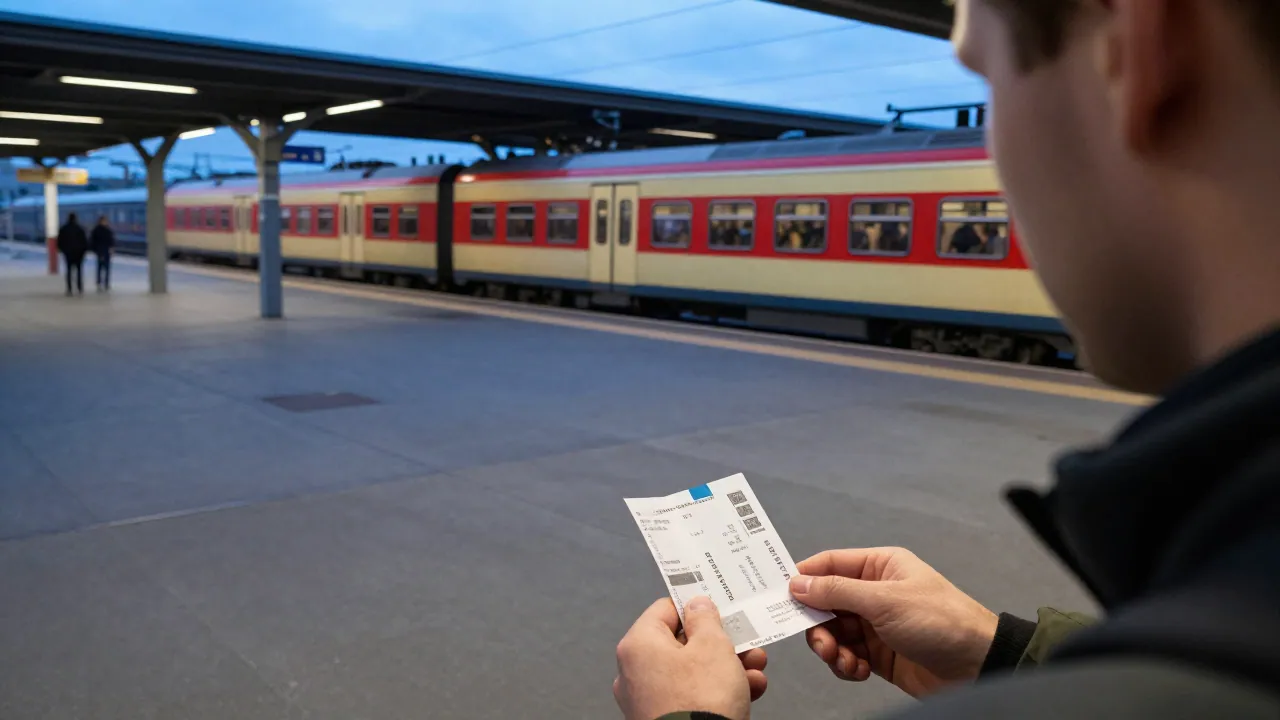
If you are changing between bus and train, give yourself more time than feels necessary. Our guide to riding Czech trains between towns explains why connections at small stations can be tighter than the timetable suggests.
Building a day plan that holds
Once you can read the panel, the day plan becomes simple. Choose a morning bus that arrives with time to walk to your destination. Note the return bus, and then note the one before it as a backup. If the return bus depends on a school-day note, treat it as uncertain until confirmed.
We also keep a paper note of the stop name and the return time, because phone batteries fade in cold weather. On a winter walk in the Tatra foothills, described in our week of research there, a photographed panel and a written time proved more useful than any app.
Timetables in the region are not designed to be difficult. They are designed to fit a lot of local conditions onto one sheet. Read the column, read the footnote, and confirm the return. That is enough for most day trips.
Questions people ask
Do rural buses run on Sundays and public holidays?
Often they do not, or they run a reduced service. Look for a separate Sunday or holiday column on the panel. If there is none, assume no service and confirm with the driver or a local shop before you rely on it.
What does a school-day note mean on a timetable?
It means the bus runs only when schools are in session. Term dates differ across the four countries, and the note may not apply during holidays. If your trip depends on that bus, confirm the school calendar or ask locally.
How do I know which stop name to look for?
Use the exact name printed on the panel, including any village or district qualifier. Towns can have more than one stop, and names may appear in a local form. A photo of the panel helps you compare names later.