A Clockmaker's Workshop Above a Quiet Street
An interview about tower clocks, wristwatches, and the patience that keeps time in a small Central European town.
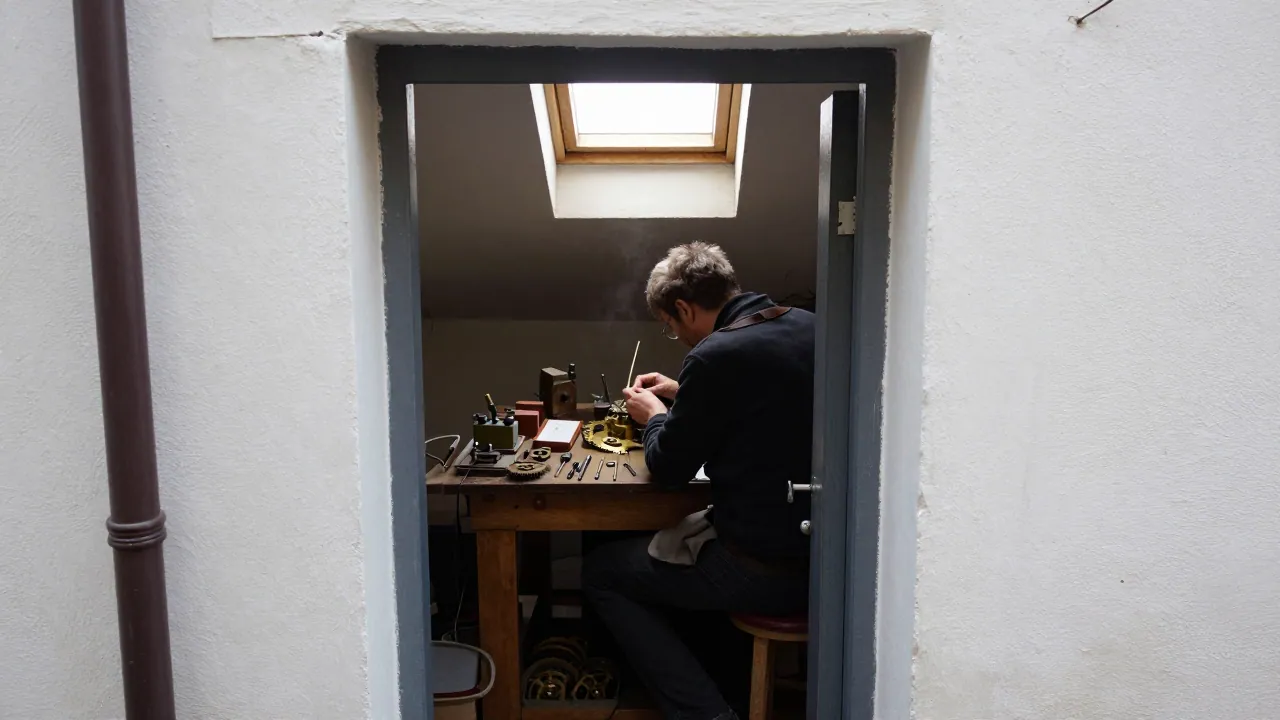
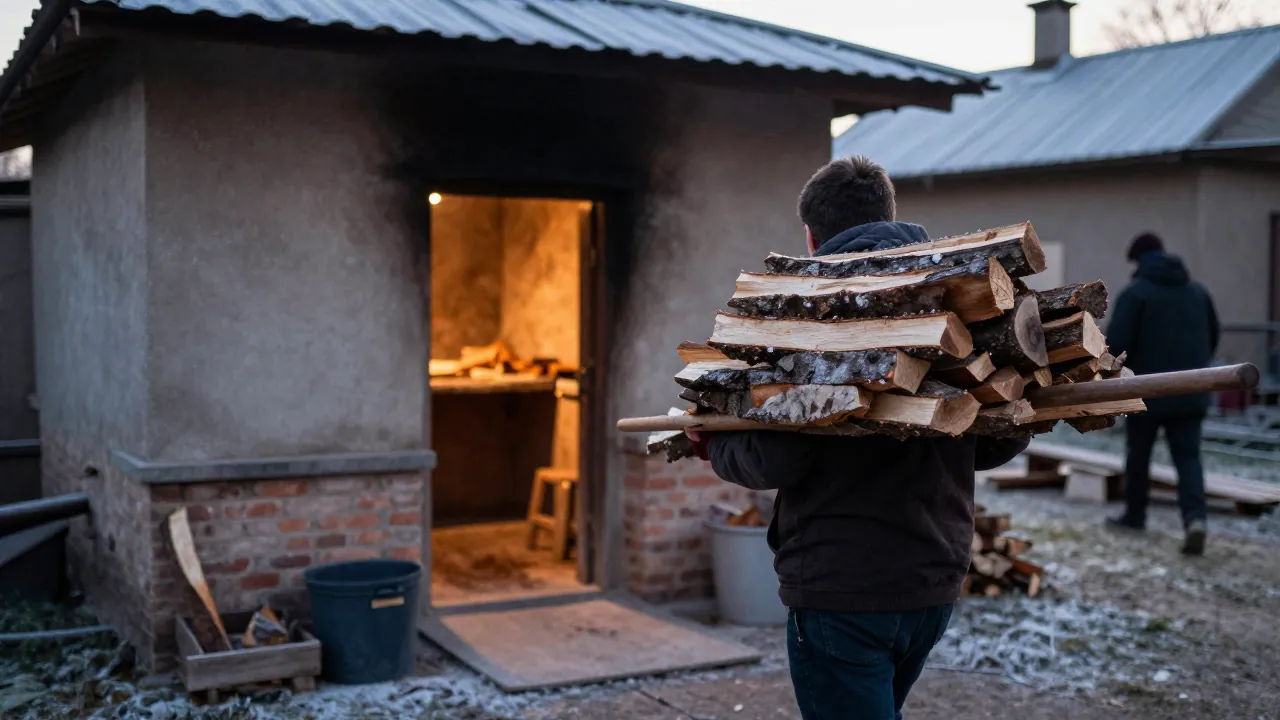
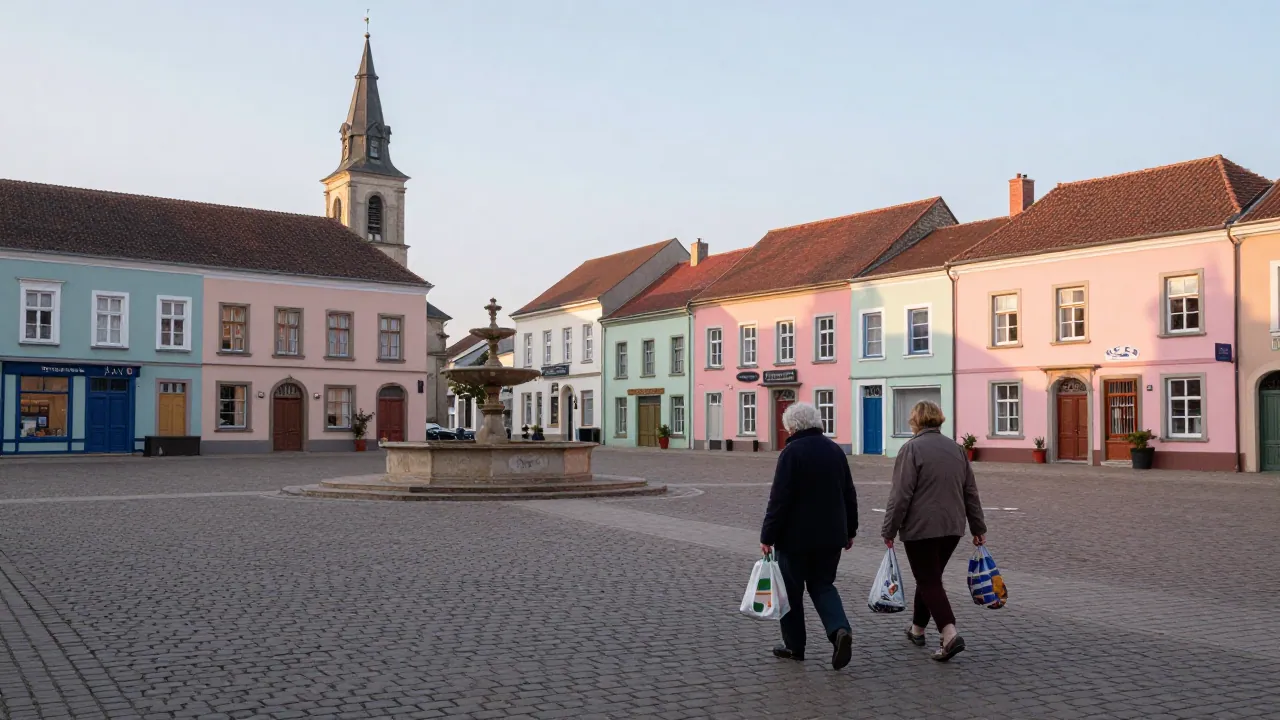
The workshop sits above a quiet street in a town of about nine thousand people, up a wooden staircase that creaks in the same place every time. Inside, the air smells of brass polish and old paper. A clockmaker we will call Mr. Novák has worked here for thirty-one years. He repairs tower clocks in village churches and wristwatches that arrive in envelopes from grandchildren. We visited him on a Tuesday morning in March, when the light comes through the window at an angle that makes the dust visible. His trade, he told us, is mostly about listening to what is not moving. That idea has shaped how we think about reporting on Central Europe, a subject we have explored in pieces such as the baker who keeps a wood-fired oven alive.
We met Mr. Novák through a local librarian who mentioned that the church clock in the next village had been stopping for a minute each week. He had just come back from fixing it. His workshop is one room with a long bench, a lathe, and shelves of labeled boxes. A wall clock ticks loudly enough to make conversation feel deliberate. He offered us tea and then answered our questions in long, careful sentences.
How did you start working with clocks?
My father was a watchmaker in a larger town, and I was a boy who took things apart. But I did not want to sit in a shop. I wanted to climb towers. So I learned both: the tiny work of wristwatches and the heavy work of tower movements. The first tower clock I repaired was in a village church with a wooden staircase so narrow that I had to carry my tools in a backpack. I was twenty-three. I still remember the sound of the bell above me when I finally got the hands moving again.
What is the difference between a tower clock and a wristwatch?
A tower clock is a machine in a building, and a wristwatch is a machine on a person. The tower clock has to endure weather, birds, and the occasional curious child. It needs a schedule: I visit some towers twice a year, once after winter and once before it. The wristwatch is more intimate. People bring me watches that belonged to their grandparents. Often the watch only needs cleaning, but the person needs to tell me the story. I have learned to listen first and open the case later.
There is also a difference in patience. A tower clock can take a whole day to adjust, and you might not know if it is right until the next morning. A wristwatch is quicker, but it demands a steady hand. Both are about precision, but the tower clock teaches you to wait. That waiting is part of the trade, and it is not wasted time.
Patience is not sitting still. It is listening until you hear which part is not moving.
What does a tower clock repair actually involve?
I start by cleaning. Dust and old oil become a paste that stops gears. Then I check the weights and the pendulum. In winter, the cold makes metal contract, and a clock that keeps perfect time in July may lose a minute in January. So I adjust the pendulum nut by small amounts. It is not glamorous work. Most of the time I am on a ladder with a cloth and a small brush. But when the clock strikes correctly at noon, the whole village hears it.
I keep a notebook for each tower. I write down the date, the temperature, and how many seconds the clock was off. Over the years, these notebooks have become a kind of history. They show that a clock is not a fixed thing. It is a relationship between a machine and a place. That is why we cannot treat Central Europe as a single story either, a point we return to in our editing process when we check details across languages.
What has changed in the trade since you started?
The tools have changed. I use a small digital camera to photograph a movement before I take it apart. I can order a part from a workshop two countries away. But the basics are the same. Young people sometimes ask me if mechanical watches are obsolete. I tell them that a watch is not only for telling time. It is a small machine that someone chose to keep. That choice is the beginning of care.
The other change is that fewer people know how to repair things. In the towns around here, we have lost many crafts, but not all. The baker who still fires a wood oven is a neighbour of mine. We talk about heat and timing. His oven and my clocks both need attention at regular hours. That rhythm is a kind of local knowledge, and it is easy to miss if you only read about a region from far away.
What should a visitor notice about time in Central Europe?
Look at the clocks in railway stations and town halls. Many are older than the buildings around them. In some towns, the clock is the oldest working thing. Also listen for the bells. They mark the hours, but they also mark work and rest. In my town, the bell at seven in the evening is the signal for the shops to close. That is not written in any law. It is simply a habit.
If you come in winter, you will see that people move differently. They plan around the light. The clockmaker's work is the same: plan around the light. I start early in summer because the tower is cooler in the morning. In December, I do more indoor work. This seasonal thinking is part of what we try to capture when we write about the Tatra foothills and other places where weather sets the schedule.
What do you want people to take from your work?
I would like them to see that precision is not cold. It is a form of respect. When I repair a watch, I am respecting the person who wore it. When I repair a tower clock, I am respecting the town that looks up at it. The work is small, but it holds a place together. That is enough for me.

As we left, Mr. Novák was already winding a wristwatch that had arrived that morning. He did not rush. The street below was quiet, and the clock above us was keeping time. We walked back to the station with a new sense of what it means to report on a region: you have to listen for the parts that are not moving, and then wait for them to start again. That lesson appears in many of our pieces, from reading a Hungarian menu to understanding why so many towns have two names.
Questions people ask
Why do tower clocks need seasonal adjustment?
Metal expands and contracts with temperature, so a clock that is accurate in summer may lose time in winter. Clockmakers adjust the pendulum at the change of seasons to keep the clock close to true.
Are mechanical watches still worth repairing?
Yes. Many watches have family history, and a good cleaning can keep them running for decades. Repair also preserves a small piece of local craft knowledge.
How can visitors hear local clock traditions?
Listen for bells in town centers, especially around noon and early evening. Many towns still mark the closing of shops with a bell, a habit that survives without any official rule.